
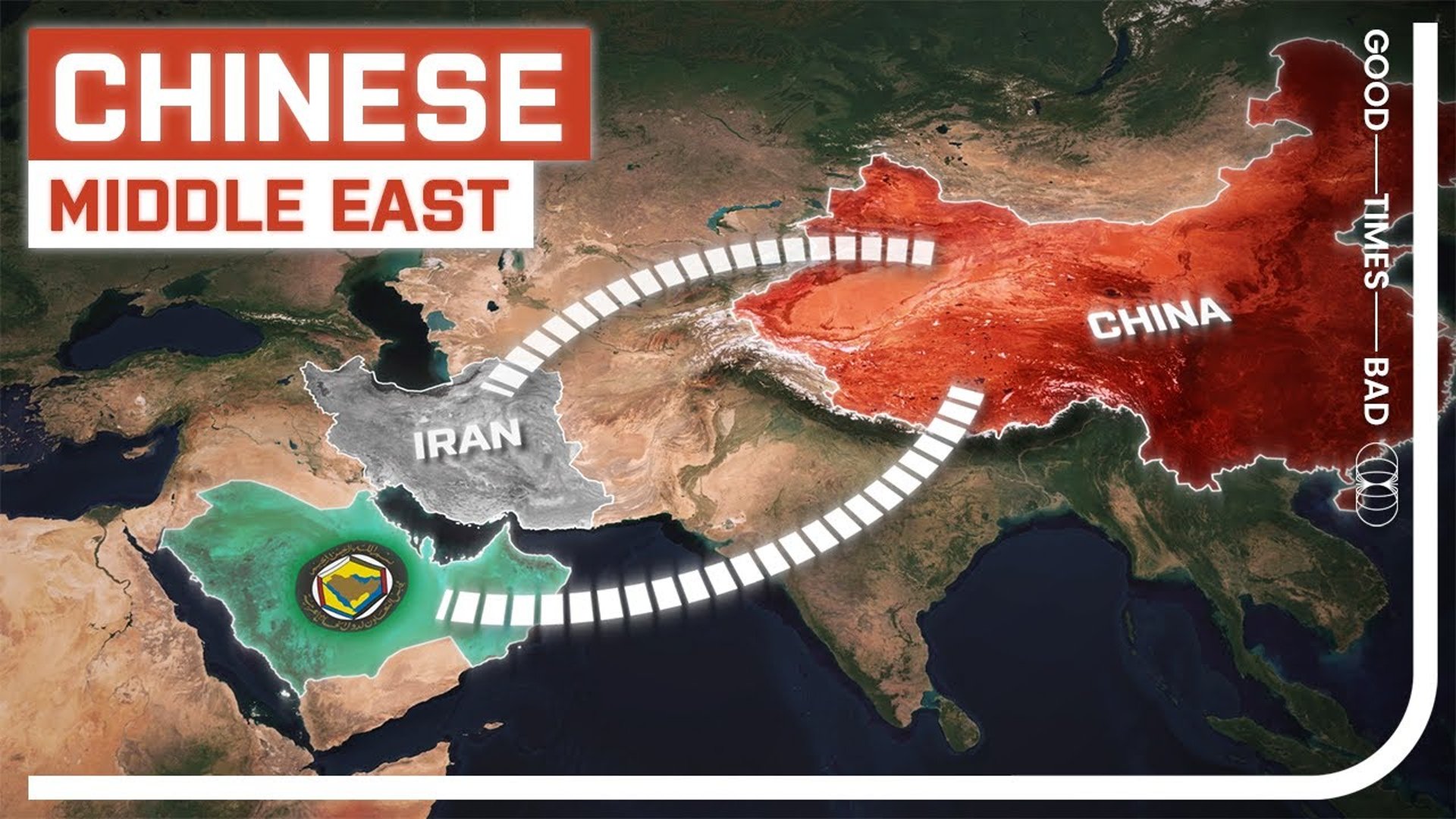
Iran, Oil, and China: Four Economic Lessons from the Conflict in the Middle East
A measured assessment of how markets, energy systems and global supply chains responded to the Iran conflict, and why the economic fallout proved more contained than early forecasts suggested. The piece explores oil market resilience, China’s uneven recovery and the difficulty of positioning portfolios around geopolitical events in real time.
INVESTMENT STRATEGY
SCG
4/30/20266 min read
There is a reasonable case that the current Iran conflict will eventually be remembered less as a singular rupture than as one stage in a longer, decades-old pattern of Middle Eastern instability. That reframing matters — because markets are increasingly pricing events as though they already think this way.
The response to this conflict has been notable for its speed rather than its panic. Energy markets adjusted. Supply chains bent but did not break. Risk assets absorbed the shock and recovered. The doomsday scenarios that circulate at the onset of every geopolitical flare-up did not materialise — and in practice, they rarely do with the severity initially feared.
Four observations from this conflict are worth holding onto:
Markets can absorb wars and energy shocks faster than most models assume. Supply chains have again demonstrated more adaptability than crisis narratives imply. Western households and corporates — unlike governments — entered this period with relatively solid balance sheets, which has lent the 2026 economy more resilience than feared. And perhaps most structurally significant: equity markets are now pricing each development in the conflict almost in real time.
Energy Markets: Shock to Resilience
The Strait of Hormuz was declared open, then closed, within a matter of hours over a single weekend — sending oil prices sharply in both directions. That kind of volatility is disorienting in the moment, but looking through it, the picture is more measured. Most energy prices are well off the highs reached in late March and early April. European jet fuel — one of the more sensitive indicators given Europe's exposure — is down roughly 20% from its peak and has retreated below 2022 levels.
The easing in financial markets is not purely sentiment-driven. It reflects real developments in physical energy markets.
At points during the crisis, oil flows through Hormuz were running above four million barrels per day — around two million excluding Iranian supply. The oil market remains in deficit, but the gap is closer to 5% than the 10% that briefly appeared possible. Alternative routing, combined with resumed Hormuz transit, has given the market enough room to partially absorb the supply shock.
There is also a structural incentive at play that tends to get overlooked: neither the United States nor Iran has a genuine interest in blocking oil and gas destined for China, India, or other major Asian buyers. That common ground is not insignificant. It suggests that Hormuz transit is more likely to be incrementally restored — subject to the usual geopolitical interruptions — than to remain structurally impaired. The precise mechanism remains unclear, but the direction is reasonably legible.
China: A Growth Rebound Worth Contextualising
Amid the conflict, China's Q1 2026 GDP came in at 5.0% year-on-year, up from 4.5% in Q4 2025 — exceeding both consensus and our own forecasts. The acceleration was driven by stronger export growth and a pickup in infrastructure investment, with high-tech manufacturing maintaining solid momentum. Fixed-asset investment stabilised after broad contraction in the second half of last year, supported by front-loaded government infrastructure spending.
The weaker side of the picture is equally worth noting. Domestic consumer spending remained subdued. Retail sales posted only modest growth. The property sector continued to drag on overall investment. The rebound is real, but it is narrow in its drivers — export-led and policy-supported rather than broadly demand-driven.
We have revised our 2026 China growth forecast up to 4.5% from 4.3%. China is less exposed to the current energy shock than several of its Asian neighbours — its structural resilience in the energy sector provides a relative buffer. But it is not immune to the wider global economic consequences, and uncertainty on that front remains elevated.
What This Means for Portfolios
Historians may eventually file this conflict as another chapter in a long-running regional story. Markets are already behaving as though that is the likely verdict.
The harder lesson for investors is this: consistently beating the market on war outcomes is exceptionally difficult. For the vast majority of investors, conflict is a trader's market — rapid repricing, high noise, limited durable signal. It only becomes a genuine investor's opportunity when markets overshoot badly enough to create asymmetric entry points. That threshold is rarely met, and when it appears to be, it requires both a clear medium-term view and the conviction to act against extreme price moves. Very few investors are genuinely positioned to do both.
We continue to favour real assets in this environment. One observation that persists, however, is that oil and oil equities have so far been unable to build lasting relative strength — which is worth holding in mind for anyone constructing commodity exposure around geopolitical themes.
All of this remains provisional. The situation continues to develop, and conclusions drawn today should be held with appropriate flexibility.
IMPORTANT NOTICE
The information contained in this material is provided for general informational purposes only and does not constitute financial, legal, tax, regulatory or accounting advice. Strategin Consulting Group and its affiliates do not provide legal or tax advisory services unless expressly engaged to do so under a separate written mandate. Readers should seek independent professional advice before entering into any transaction, restructuring exercise or investment decision. Any references to structures, jurisdictions, asset classes, operational frameworks or strategic considerations are illustrative in nature and may not be suitable for all circumstances. The appropriateness of any strategy depends on a range of factors including regulatory environment, liquidity requirements, commercial objectives, risk tolerance and tax position.
RISK CONSIDERATIONS
All investments and commercial activities carry risk. Market conditions, geopolitical developments, regulatory changes, currency movements and operational disruptions may materially affect outcomes. Past performance is not indicative of future results, and no representation is made that any strategy or structure discussed will achieve comparable outcomes in future environments. Diversification, governance frameworks and strategic planning may reduce certain exposures but cannot eliminate risk entirely or guarantee profitability, continuity or capital preservation. Forward-looking statements reflect current assumptions and judgment at the time of publication and should not be interpreted as assurances of future performance. Any projections, scenario analyses or hypothetical illustrations are provided solely for reference purposes. Actual outcomes may differ materially depending on timing, implementation, market conditions and jurisdictional considerations.
NON-RELIANCE
While Strategin Consulting Group believes the information contained herein to be derived from sources considered reliable, no representation or warranty, express or implied, is made regarding its accuracy, completeness or ongoing validity. Information may change without notice and Strategin Consulting Group assumes no obligation to update or revise any content following publication. Nothing in this material should be construed as an offer, solicitation, recommendation or invitation to engage in any transaction, investment or advisory relationship. Any engagement between Strategin Consulting Group and a client is governed exclusively by the terms of a formal written agreement. This material may contain commentary, opinions or strategic observations formed under prevailing market and geopolitical conditions. Such views are inherently subject to change and may differ from opinions expressed by other parties, institutions or market participants.
Readers remain solely responsible for conducting their own independent assessment and obtaining appropriate professional advice prior to making financial, operational or strategic decisions.
Related Articles
See what else is trending in this category ↗
Your Journey:
INTELLIGENT COORDINATION \\ CURATED CONNECTIONS
An independent point of access where discerning clients receive strategic guidance, curated introductions to licensed specialists and thoughtfully structured pathways for capital stewardship, governance and private structuring.
PRIVATE CLIENTS
PARTNER INSTITUTIONS
A discreet channel to qualified private clients who are actively seeking sophisticated solutions, supported by seamless introductions and a boutique collaboration framework designed to expand reach without compromising regulatory discipline.
© 2025 Strategin Consulting Group Limited \\ IBC No. 247501 \\ Office F2-2A, Oceanic House, Providence Estate, Mahé, Seychelles \\ +248 4373 733 \\ info@thinkstrategin.com
Strategin Consulting Group Limited (SCG) is an independent strategic consulting firm. The International Business Company (IBC) is not a licensed financial services provider and does not undertake investment management, financial advisory, fiduciary, custodial or other regulated financial activities. Where appropriate, Strategin Consulting Group facilitates introductions to independent third-party firms that are duly authorised and regulated within their respective jurisdictions. Any regulated services are provided exclusively by those external firms in accordance with their own regulatory obligations, engagement terms and supervisory frameworks. The Company may receive referral fees in connection with certain introductions. Such arrangements do not affect the independence of its strategic advisory perspective or the selection of appropriate specialist providers. All information presented on this website and in communication issued by SCG is provided solely for general informational and educational purposes, is non-solicitational in nature and does not constitute an offer, invitation, recommendation or solicitation to engage in any investment, financial, legal, tax or other regulated activity. It does not constitute financial, investment, legal, tax or strategic advice and should not be relied upon as such. Any engagement with Strategin Consulting Group is subject to formal agreement and applicable terms & conditions. Each matter is assessed individually in light of the specific circumstances of the relevant client or venture.